Soartec® Industrial Tools Engineering Team · Reviewed & updated August 2026
Quick answer: Air sanders (pneumatic sanders) are used throughout aircraft maintenance, repair, and overhaul (MRO) for paint stripping and pre-paint surface prep, composite panel repair, corrosion removal from aluminum skin, and deburring or blending metal seams and rivet lines. Because these surfaces feed directly into bonding, priming, and painting steps, aviation shops need sanders that are oil-free (no lubricant contamination), fitted with dust extraction (for composite and chromate-paint dust), and built with anti-vibration designs (to reduce technician hand-arm vibration exposure over long shifts).
Key Takeaways
- Aircraft are typically repainted roughly every seven years, and most of that work is still finished by hand with random orbital and inline air sanders — not machines. [Aviation Pros]
- Many legacy aircraft coatings contain lead, cadmium, or hexavalent chromium, all OSHA-regulated substances — which is why sealed dust extraction at the sander, not just room ventilation, is a baseline requirement. [Aviation Pros]
- Heavy, vibrating pneumatic sanders used for hours at a time are a documented cause of hand-arm vibration syndrome (HAVS) and repetitive-stress injuries among aviation paint and finishing technicians. [Aviation Pros]
- Oil-free tool operation matters because contaminating an aluminum or composite surface before bonding or painting causes adhesion failures and rework — the same principle behind the FAA-recognized warning against using steel abrasives on aluminum, which embeds ferrous particles that ruin a paint job. [AOPA]
- Composite (carbon fiber/fiberglass) dust is its own hazard class and is a major reason MRO shops standardize on central-vacuum or self-vacuum sanders rather than open, non-vacuum tools for structural composite work.
What Is an Air Sander?

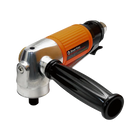
An air sander (also called a pneumatic sander) is an abrasive finishing tool powered by compressed air instead of an electric motor. A pneumatic supply spins or oscillates a sanding pad — random orbital, in-line/straight-line, belt, or "jitterbug" (palm) motion — to remove material, blend surfaces, or prepare a substrate for coating.
In industrial and MRO (maintenance, repair, and overhaul) settings, air sanders are preferred over electric sanders for continuous, heavy-duty use because they run cooler under sustained load, have a lighter tool-to-power ratio, carry no motor or spark risk in fuel-adjacent hangar environments, and hold up to the duty cycles of production paint shops and structural repair stations.
Why Aviation MRO Relies on Pneumatic Sanders
Aircraft maintenance combines two things that make tool choice unusually consequential: expensive substrates (aluminum skin, composite structure, coated surfaces) and safety-critical downstream steps (bonding, priming, corrosion protection, repainting). A sander that leaves oil residue, embeds the wrong metal particles, or throws uncontrolled dust doesn't just make a mess — it can force a rework cycle or compromise a coating's adhesion. That's why the requirements below show up repeatedly across MRO tooling specs, independent of any one shop's internal standard.
Key Applications of Air Sanders in Aircraft Maintenance & Repair
1. Paint Stripping & Surface Prep Before Repainting
Commercial aircraft are typically repainted on a cycle of roughly every seven years, and components like radomes and nacelles are frequently pulled and repainted separately. [Aviation Pros] Random orbital sanders and coated abrasive discs do the bulk of the manual paint removal and feather-edging, working alongside chemical strippers and blasting on more complex geometries.
Two factors drive tool selection here:
- Contained dust extraction. Aircraft paint layers can contain lead, cadmium, or hexavalent chromium — substances regulated by OSHA — so a sander's vacuum shroud has to keep a seal against the panel; a broken seal "spews dust everywhere" and defeats the extraction system entirely. [Aviation Pros]
- Low vibration for long shifts. Painting and finishing technicians spend hours holding sanders overhead or at awkward angles across large fuselage sections — a posture and duration combination linked to high rates of shoulder, arm, wrist, and hand injuries in the industry. [Aviation Pros]
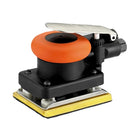
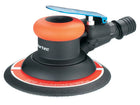
Suited Soartec tools: the WS-120 Series Oil-Free Random Orbital Sander (5"/6" pad, central-vacuum or self-vacuum) for large panel work, and the WS-1331 Anti-Vibration Jitterbug Sander for feather-edging and detail areas where technicians are on the tool longest.

2. Composite Panel Sanding & Repair
Modern aircraft use extensive composite structure (carbon fiber and fiberglass skins, fairings, control surfaces), and composite dust is a distinct hazard category from metal or paint dust — fine enough to become airborne and require dedicated extraction rather than general shop ventilation. This is a major reason composite repair stations standardize on vacuum-shrouded sanders instead of open, non-vacuum tools.
3M's aerospace surface-prep guidance for composite and metal repair specifically frames sanding as a productivity and rework issue: proper surface preparation before painting "means less risk of wasting time and money on rework further downstream," and 3M markets abrasive systems designed to "help maintain a cleaner work environment" during this step. [3M Aircraft MRO]
Suited Soartec tools: oil-free WS-120 Series orbital sanders in central-vacuum configuration for open panel sanding, plus the WS-118 Air Inline Sander for straight seams, spar caps, and repair-patch edges where a linear back-and-forth stroke gives more control than an orbital motion.
3. Corrosion Removal on Aluminum Skin & Structure
Light surface corrosion on aircraft aluminum is treated by abrasion, followed by a corrosion inhibitor (such as zinc-chromate primer), another primer coat, and paint; if corrosion has removed a significant amount of base metal, the part is replaced rather than restored. [AOPA] The FAA's own guidance on corrosion control (AC 43-4B) governs how this kind of work is documented and inspected on certified aircraft. [FAA AC 43-4B]
One specific, well-documented warning applies directly to abrasive choice: steel or stainless brushes that have previously touched steel or rust will work ferrous particles into aluminum, and those embedded particles will ruin the subsequent paint job. [AOPA] The same cross-contamination logic is why oil-free, dedicated abrasive tooling matters on aluminum skin generally — any residue or foreign particle left behind at this stage travels straight into the primer and paint.
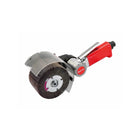
Suited Soartec tools: WS-120 Series oil-free orbital sanders for open skin panels, and the Mini Air Belt Sander (WX-125 Series) for tighter radii, stringers, and localized corrosion spots where a belt profile reaches better than a round pad.

4. Deburring & Rivet-Line / Seam Blending
Sheet-metal work on aircraft skin — new panel fabrication, riveting, and repair patches — requires deburring drilled and countersunk holes and blending seams so they don't create stress risers or catch airflow. This is precision, low-material-removal work done in short, repeated passes rather than aggressive stock removal, which is why compact, well-balanced tools matter as much as raw power.
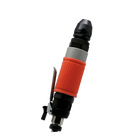
Suited Soartec tools: the WS-118 Air Inline Sander (10mm stroke, hook or vinyl pad face) for consistent linear blending along seams and rivet lines, and compact jitterbug sanders from the Air Jitterbug Sander collection for contoured panel areas a straight-line tool can't reach.

5. Cabin, Trim & Precision Metal Finishing
Beyond the airframe itself, MRO and completions shops finish a wide range of metal trim, brackets, and stainless components in the cabin and galley. The same high-frequency linear sanding motion that gives a "flawless, mirror-like finish" on stainless steel panels in industrial settings applies directly to aviation cabin hardware and fabricated brackets that need a consistent, scratch-free surface. WS-118 Air Inline Sander
What to Look for in an Aviation-Grade Air Sander
| Requirement | Why It Matters in Aviation | What to Check |
|---|---|---|
| Oil-free motor | Any lubricant residue on a surface headed for bonding, priming, or painting risks adhesion failure and rework | Confirm the tool is specified "oil-free," not just "low-oil" |
| Sealed dust extraction (central-vacuum or self-vacuum) | Paint dust may contain lead/cadmium/hexavalent chromium; composite dust is a separate inhalation hazard | Central-vacuum for shop-wide extraction systems; self-vacuum for mobile/field work |
| Anti-vibration design | Reduces hand-arm vibration syndrome (HAVS) risk during long, repetitive finishing shifts | Look for tools explicitly marketed with anti-vibration mechanisms, not just "ergonomic grips" |
| Pad size & orbit match to task | Large panels need coverage; seams, rivets, and contoured areas need precision | 5"–6" orbital pads for open panels; inline/jitterbug for edges and detail work |
| Weight & balance | Technicians often work overhead or at awkward angles across large airframe sections | Favor lighter, top-grip designs for extended overhead use |
Soartec Air Sanders for Aviation MRO
| Application | Recommended Soartec Sander | Key Spec |
|---|---|---|
| Large panel paint prep / composite sanding | WS-120 Series Oil-Free Random Orbital Sander | 5"/6" pad, oil-free, central- or self-vacuum |
| Feather-edging & long-shift finishing | WS-1331 Anti-Vibration Jitterbug Sander | 3×4" pad, 3mm orbit, anti-vibration mechanism |
| Seam / rivet-line blending, straight edges | WS-118 Air Inline Sander | 10mm stroke, central vacuum, hook or vinyl pad |
| Tight-radius corrosion spots & stringers | WX-125 Mini Air Belt Sander | 10×330mm belt, adjustable 180° head |
| Full sander lineup | Soartec® Air Sander Collection | Random orbital, inline, jitterbug, belt & water sanders |
Note: tool selection for work on certified aircraft should always follow your shop's approved maintenance manual, engineering order, and OEM-specified process — this guide covers general tool requirements, not airworthiness sign-off.
FAQ: Air Sanders in Aviation
Are air sanders used on certified commercial aircraft? Yes. Random orbital and inline pneumatic sanders are standard equipment in aircraft MRO and paint facilities for surface prep, corrosion removal, and finishing — always used within the processes specified in the shop's approved maintenance procedures.
Why do aviation shops require oil-free sanders? Oil residue left on an aluminum or composite surface can cause adhesion failures in subsequent bonding, priming, or painting steps, leading to costly rework. Oil-free pneumatic motors eliminate that contamination risk entirely.
What's the difference between a random orbital sander and an inline sander for aviation work? A random orbital sander uses a round pad in a randomized orbit, ideal for covering large, open panel areas evenly. An inline (straight-line) sander moves in a linear back-and-forth stroke, giving more control for seams, rivet lines, and narrow contoured areas.
Why is dust extraction so important for aircraft sanding? Legacy aircraft coatings can contain regulated substances like lead, cadmium, or hexavalent chromium, and composite dust is a separate inhalation hazard. Central-vacuum or self-vacuum sanders keep dust contained at the source rather than relying on room ventilation alone.
Can air sanders cause hand-arm vibration syndrome (HAVS)? Extended use of heavy, vibrating pneumatic sanders is a documented contributor to HAVS and repetitive-stress injuries among finishing technicians, which is why anti-vibration sander designs and shift rotation are both used to manage exposure.
Ready to Equip Your MRO or Paint Shop?
Browse Soartec's full range of oil-free, dust-extraction, and anti-vibration air sanders built for continuous industrial duty: Shop Air Sanders →
For a custom tooling spec or bulk quote for your MRO shop, request a quote, or learn about distributor pricing.