When you're deep into a custom build — whether it's an automotive restoration, a fabrication project, or a production assembly line — the wrong wrench slows everything down. Air open-end wrenches are one of the most underrated pneumatic tools in a professional shop: faster than a hand wrench, more precise than an impact driver, and designed to work in tight spaces where a socket won't fit.
This guide breaks down exactly how to choose the right air open-end wrench for your project, covering hex size, torque range, speed, and the key features that separate a good tool from a great one.
What Is an Air Open-End Wrench?

An air open-end wrench is a pneumatic tool that uses compressed air to rotate fasteners through an open-ended jaw — the same profile as a standard combination wrench, but driven by air pressure instead of your arm. The key advantage over an air impact wrench is control: open-end wrenches apply torque more gradually, making them ideal for soft-joint fasteners, precision assemblies, and applications where over-torquing would cause damage.
Most professional models feature a full auto shut-off mechanism, which automatically stops the tool when it reaches the target torque — a critical feature for custom work where consistency matters.
The Most Important Selection Criteria
1. Hex Size Range
The single most important factor is matching the wrench to the fasteners on your project. Air open-end wrenches come in fixed hex sizes, so you need to know which sizes your project uses before buying.
| Model | Hex Size Range | Best For |
|---|---|---|
| WX-2601 | 8mm, 10mm, 5/16" | Light assembly, electronics housings, small custom parts |
| WX-2602 | 7–17mm | General custom fabrication, most automotive fasteners |
| WX-2603 | 17–25mm | Mid-range custom builds, chassis work, engine bay |
| WX-2604 | 24–32mm | Heavy custom fabrication, structural steel, large engine components |
| WX-2605 | 36–55mm | Industrial custom work, heavy equipment, large-diameter fasteners |
If your project spans multiple size ranges — for example, an automotive custom build using 10mm dash fasteners and 24mm suspension bolts — you may need more than one model.
2. Torque Range
Each model in the WX-260x series is engineered for a specific torque range that corresponds to its hex size:
- WX-2601: 6–12 Nm — ideal for delicate assemblies where over-torque is a real risk
- WX-2602: 7.5–15 Nm — the sweet spot for most general-purpose custom projects
- WX-2603: 10–20 Nm — strong enough for mid-weight automotive and fabrication work
- WX-2604: 12–24 Nm — handles heavier structural fasteners without fatigue
- WX-2605: 14–28 Nm — designed for the largest fasteners in industrial custom builds
Always cross-reference the required torque spec from your component's service manual with the wrench's torque range. Using a tool at the top of its range continuously will wear it out faster than one operating in its mid-range.
3. Free Speed (RPM)
Faster isn't always better with open-end wrenches. Higher RPM means faster fastening but less feel — important if you're threading into soft materials or working near finished surfaces.
- WX-2601: 300 rpm — fast cycling for small fasteners
- WX-2602: 230 rpm — balanced speed for general use
- WX-2603: 150 rpm — controlled speed for mid-size fasteners
- WX-2604: 115 rpm — slower, more deliberate action for heavier work
- WX-2605: 100 rpm — precision control on large industrial fasteners
The larger the hex size, the slower and more controlled the tool. This is by design — it gives you more feedback at higher torque values.
4. Auto Shut-Off Feature
All five Soartec WX-260x models feature a full auto shut-off mechanism. This is non-negotiable for custom projects where you're torquing to a spec. When the preset torque is reached, the tool stops — no need to watch a torque gauge, no risk of snapping a bolt in an aluminum housing.
For production environments, auto shut-off also protects your tools and your parts across hundreds of cycles per shift.
Choosing by Project Type
Automotive custom builds: The WX-2602 covers the majority of interior and exterior fasteners (8–17mm is the most common range on modern vehicles). Pair it with the WX-2604 for suspension and drivetrain components.
Custom metal fabrication: Start with the WX-2603 for structural joints and step up to the WX-2604 or WX-2605 for heavier steel connections.
Production assembly lines: Speed and consistency matter equally here. The WX-2601 and WX-2602 are the go-to choices for electronics, appliance, and small parts assembly where auto shut-off prevents over-torque damage at volume.
Heavy equipment maintenance: The WX-2605 handles hex sizes up to 55mm — covering the large fasteners found on construction machinery, agricultural equipment, and industrial installations.
Air Supply Requirements
Before purchasing, confirm your compressor can support the tool. Air open-end wrenches generally require a clean, dry air supply at 90 PSI (6.2 bar). If your shop runs multiple pneumatic tools simultaneously, ensure your compressor's CFM rating can handle the combined demand without pressure drop — pressure drop is one of the most common causes of inconsistent torque on auto shut-off wrenches.
Use 1/4" NPT fittings and keep your air lines as short and direct as possible to maintain consistent pressure at the tool.
Final Checklist Before You Buy
Before selecting your model, run through this quick checklist:
- What are the hex sizes on your project? (Map them to the table above)
- What is the required torque spec? (Check service manuals or engineering specs)
- How many fasteners per shift? (High-volume use → stay in the mid-range of the torque spec)
- Do you need auto shut-off? (For custom and precision work: yes, always)
- What's your air supply pressure and CFM capacity?
Explore the Full Soartec Air Open-End Wrench Range
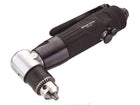
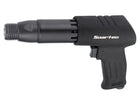
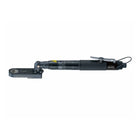
Soartec's WX-260x series covers hex sizes from 8mm to 55mm in five models, all featuring full auto shut-off and lightweight ergonomic design for extended use. Browse the complete lineup:
Not Sure Which Model Fits Your Project?
Every custom project is different — fastener specs, cycle rates, access constraints, and application environment all affect which tool is the right match. If you'd like a more tailored recommendation, our product team is happy to help you spec the right tool for your exact requirements.